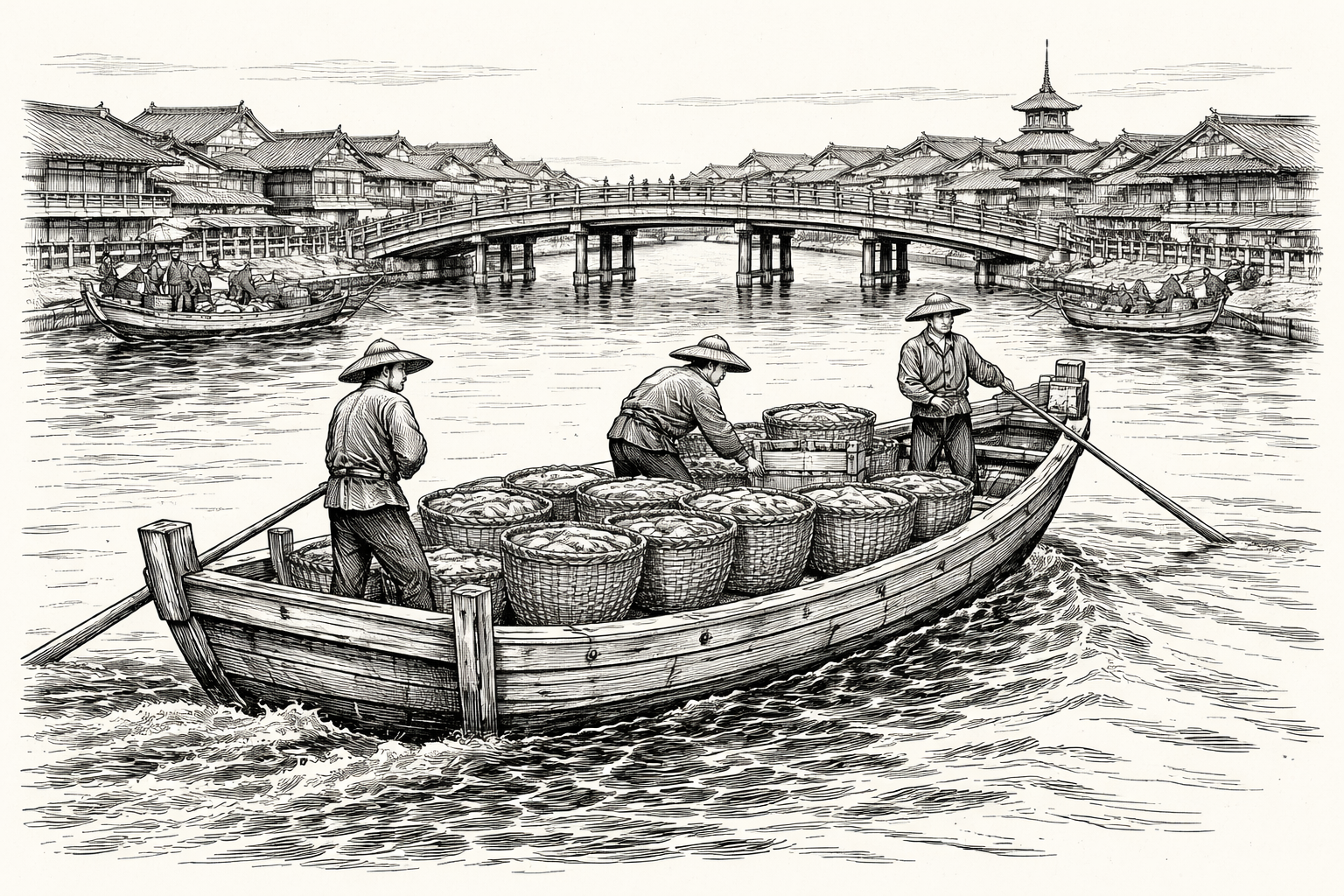
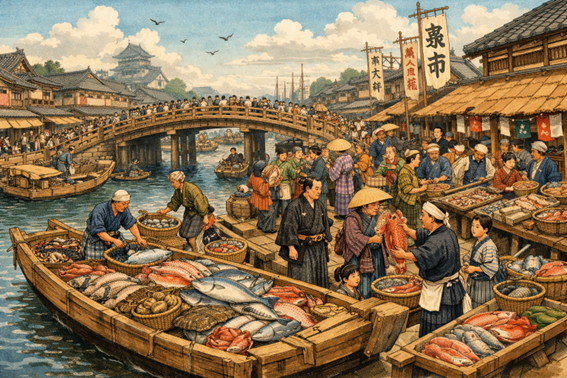
Large quantities of fish and shellfish were transported from Tsukuda Island to the Nihonbashi Fish Market. Abandant seafood was caught in the Sumida River and the waters near Tokyo Bay during the Edo period.
Resettlement of Tsukuda Island Fishermen
Ieyasu Tokugawa was traveling to the Osaka area in Hyogo Prefecture fpr worship when he learned that Nobunaga Oda had been assassinated at Honno-ji Temple before Edo government established. Realizing the danger to his own life as a former retainer of Nobunaga, he immediately attempted to return to Okazaki Castle. However, he was forced to stop due to violent storm and river flooding. At that time, fishermen, Tsukuda Village in Osaka Prefecture came to the aid of Ieyasu and his party, enabling them to cross the river safely.
Prompted by this incident, after establishing the Edo Shogunate, Ieyasu summoned about 30 fishermen from Tsukuda Village, Osaka to Tsukuda island, Edo, granted them fishing rights from the Sumida River to near Tokyo Bay, and had them deliver icefish and other seafood to Edo Castle.
As lots of seafood was available at the time, they sold their catch directly from their boats at Nihonbashi, on the way back from Edo Castle. This marked the beginning of the Nihonbashi Fish Market.
Tsukishima Island
Tsukuda Island is an artificial island created by fishermen brought in from Settsu Province (now Osaka City) in the early Edo period, who reclaimed the tidal flats at the mouth of the Sumida River.
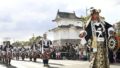
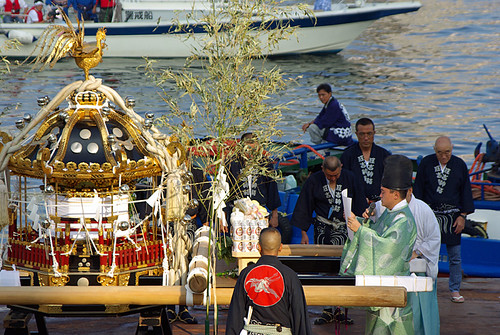
Sumiyoshi Shrine, branch of Osaka’s Tamino Shrine, serves as Island’s guardian shrine, and its festivals and Bon dances are still celebrated today. The photo on the left shows the portable shrine placed on ceremonial boat.
Tsukuda-ni originated here. Small fish and shellfish unsuitable for sale were boiled in soy sauce to preserve them, and several tsukudani shops still operate today.
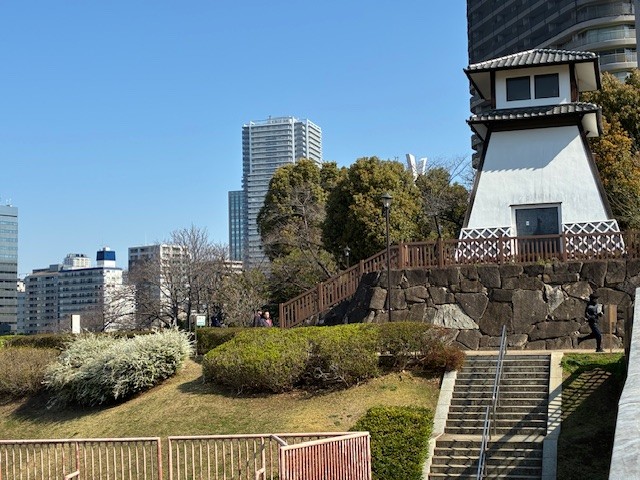
Tsukuda Island Lighthouse originated as permanent nightlight built to guide ships navigating the mouth of the Sumida River, and the structure standing today serves as a monument to that era. This area is famous for its cherry blossoms and bustles with visitors during the season.
Nihon-bashi bridge
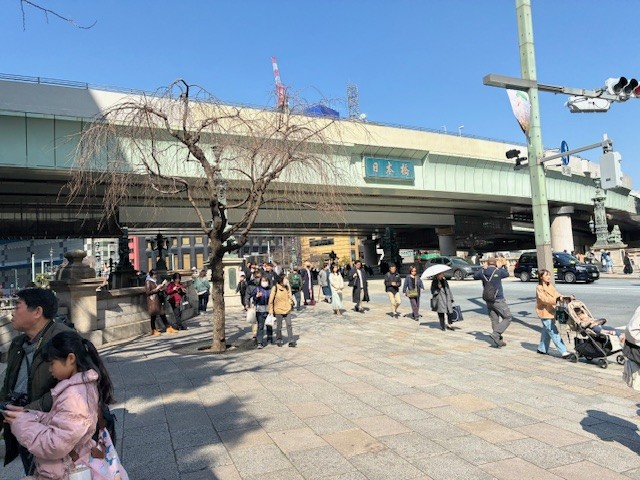
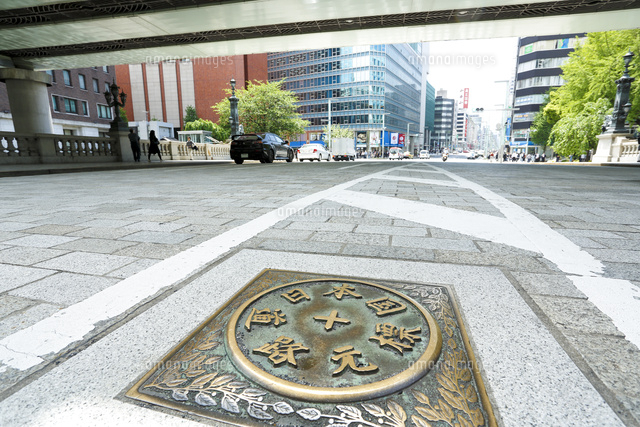
The bridge’s name derives from the fact that “it lies at the heart of Edo, and the routes to all provinces are determined from here.” Plate “Japan National Road Zero Point” is embedded in center of the bridge, designating it as starting point of the Five Major Highways(Tōkaidō, Nakasendō Nikko, Ōshū, and Kōshū).
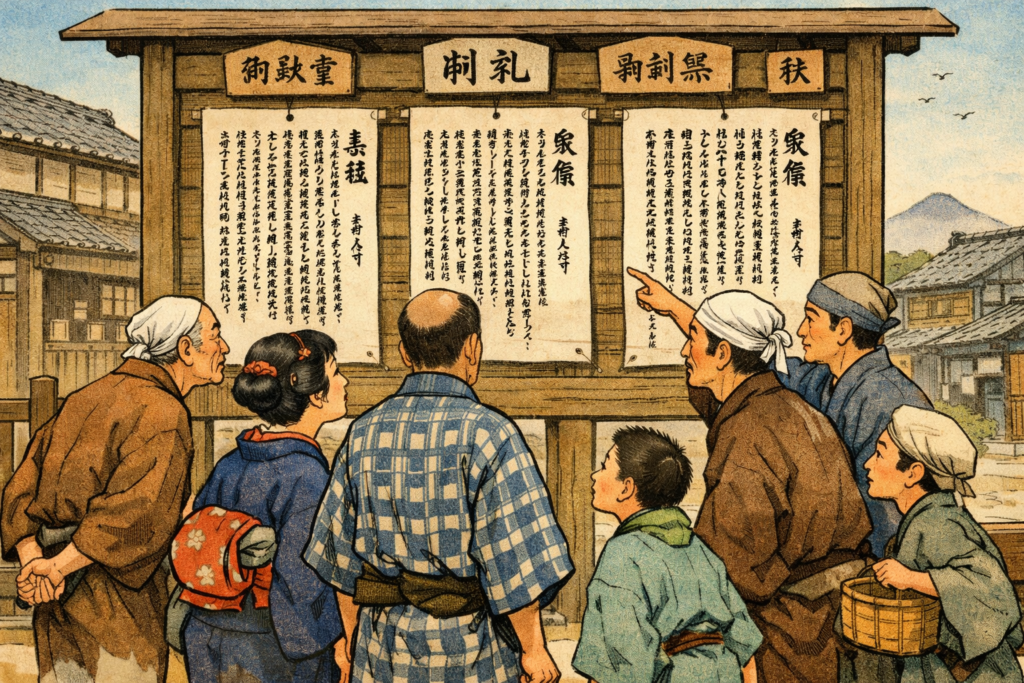
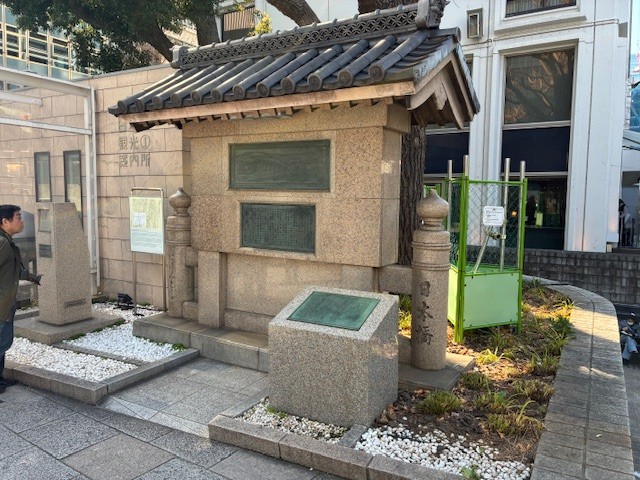
On the west side of the southern end, there was a notice board installed highly where laws and memoranda were written on wooden plates.
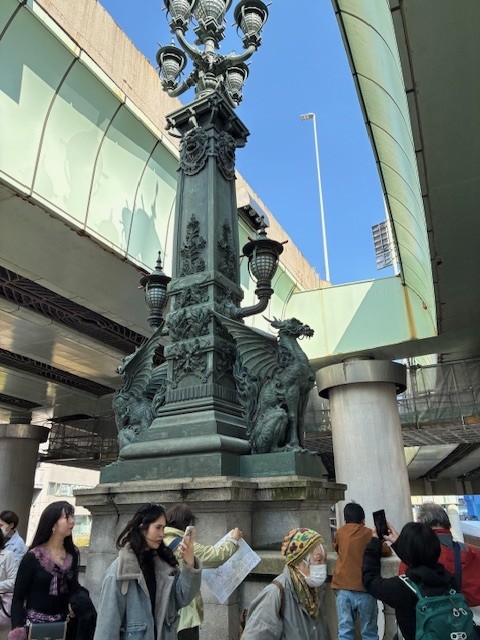
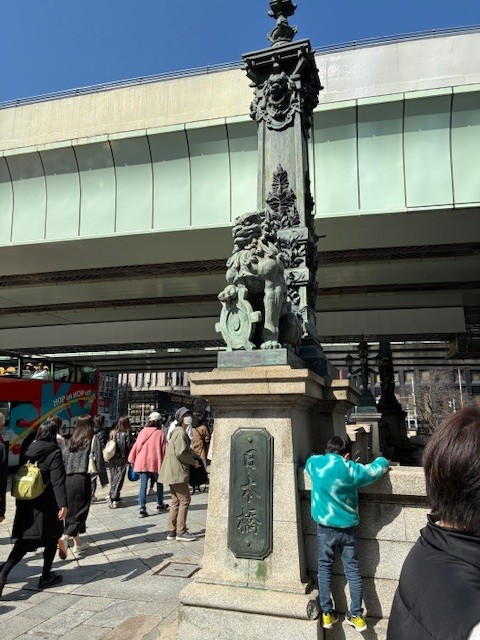
The giraffe statue in the center (left photo) symbolizes Tokyo’s prosperity, while the lion statues at the four corners (center photo) represent protection.